Showing posts with label writing. Show all posts

Monday, January 30, 2012

Living with Wild Animals? Read SERVAL SON by Kristine M. Smith

Did you ever wonder what it would be like to share your life with a wild animal? Author Kristine M. Smith has released a new book, SERVAL SON, based on her experiences raising a wild cat. She is an animal advocate with decades of combined experience as a wildlife rehabilitator, captive animal caretaker, and humane educator.

She is also a well-regarded author and copywriter, writing for businesses around the world. You can learn more about her writing services by visiting KristineMSmith.biz.

Welcome Kristine! This is such an interesting topic. Can you tell us about your new book and what inspired you to write it?


SERVAL SON: Spots and Stripes Forever is a cautionary true story about what it’s like to own—and be owned by—a wild animal for its entire lifetime; in my case that was 17 years.

I wrote the book for anyone considering getting a knee-high or taller wild animal as a pet or for those who would like to vicariously raise one without all of the accompanying rules, regulations, and responsibilities. It’s so temping to get a little ball of fur when they’re babies—and then they grow up, which is a whole new ball game.

I couldn't imagine my life without animals. We have three dogs and three cats right now. I assume caring for a wild animal is much different. What do you see as the pros and cons?

People want wild animals as pets for a number of reasons. Some have an abiding love for wildlife and want to experience them up close and personal. Others want a wild pet as an ego boost or status symbol—a way to stand out in the mass of humanity. Others feel the tug of wanting to rescue a wild animal that seems to be living in less ideal conditions than they believe they can provide—these are the “rescuers” in our midst.

Pros: If you do it right and absolutely nothing goes wrong (which rarely happens), watching a captive wild animal grow into its own without changing or corrupting its basic nature and personality is heartwarming beyond description. Having them respond to you with affection and trust is fabulous. Being able to visit schools, fairs, TV shows and other public venues to help foster awareness and understanding of their plight in the wild and as pets is always a big perk if you can remain calm enough in those situations not to set them off and cause them to become anxious.


Cons: Too many people, I’m sad to say, get them as status symbols or centerpieces for how they want other people to think about them. I had one interested party ask me at the time “What’s it like to walk Deaken (that was my serval’s name) in the neighborhood on a leash?” He thought that would be quite the rush. The fact is you don’t parade a wild animal in your neighborhood or anywhere else except under rigidly controlled circumstances. Guaranteed—some of your neighbors will NOT like knowing there’s a wild animal nearby and they can make your life a living hell. Fearful people do fearful things.

Would you do it again?

I wouldn’t have missed it for the world; I would never do it again. It was the most heartwarming, the most traumatic 17 years of my life. Raising a happy, healthy wild cat—keeping it safe from people and people safe from it—requires complete attention, nerves of steel, and an insane amount of good luck. Animal sanctuaries are overflowing with the forlorn castoffs of people who tried to do what I did and failed. It's heartbreaking to see former wild pets watching wistfully for owners they never will see again.

You can order SERVAL SON through Amazon.com.

These days, Kris is owned by two geriatric cats, and two fun-filled goats, Laverne and Shirley. You can follow their antics at AlmostFamousByDesfault.blogspot.com.

Sunday, November 13, 2011

How to Price Your Writing Projects

Today we welcome Kate Croston to Writers in Business. Kate is a freelance writer who holds a bachelors degree in Journalism and Mass Communication. She writes for various clients and loves contributing internet service related topics.

As a freelance writer, I find it challenging to determine the price on some of my projects. I usually end up selling myself short. Kate is here to share her ideas with us on how to determine the correct price for our work.

How to Price Your Writing Projects

Freelance writing is a dream job for a lot of writers and bloggers out there, and with good reason – you get to basically set your own schedule and write what you want to write about. One of the biggest obstacles is figuring out how much to charge for your work – after all, you can’t be too expensive because you don’t want people to pass you by because you’re too pricey, but you can’t be too cheap either because hey, you’ve got bills to pay too! So how do you determine the right price for your writing projects?

Monthly Fees

To start, you have to determine how much money you need to survive. That means factoring in how much your rent or mortgage costs, your static monthly bills, your grocery and gas costs, and how much extra you need in case of an emergency or for some extra padding. At the end of the day, no matter what you’re fees are you have to be able to pay all of your bills otherwise freelance writing isn’t going to work out.

Experience

You’ll need to establish if you’re charging an hourly rate or if you’re charging per project – or if you’ll do a combination. Your rate per project should be loosely based off of your hourly rate anyway, so figuring that out is key when setting your rates. Be careful when charging hourly rates because you don’t want to end up in a position where you finish a project much sooner than you first thought you would and are now making less on a project then you originally thought you would. You’ll also have to take into consideration how much experience you have writing – seasoned writers with a lot of credible references and examples of work can charge more than those that are fresh out of school. If you’re moving from a salaried position to freelance writing, take a look at your current salary and see how it translates to what you’re moving into, especially if you’re leaving a full-time copywriting or writing position to freelance.

Regularly Evaluate

As your experience increases, your rates should to, so you’ll need to go through a few times a year and look at your rates, your work, and the feedback you’ve received from clients and assess if you’re still charging enough money. If you can back up higher prices with glowing accolades to a job well done, go for it. If you can’t back it up though, you’ll need to evaluate why you can’t raise your prices yet and fix it so that the next time around you can. Also, figuring out the market value of freelance writers in your area is a good way to determine if you’re charging too much or too little.

Don’t Sell Yourself Short

Freelance writers, especially new ones, have a tendency to low-ball their prices and thus ask for less then they’re actually worth. If you know you have a good product, charge for it. Freelancing can be a scary world to jump into, but people will pay a good price for excellent work – don’t sell yourself short.

Kate is a regular contributor to InternetService.net and can be reached at KateCroston.croston09@gmail.com.

Sunday, September 11, 2011

Writing Resources

Writers often contact me to ask about resources. There are many options on the Internet, but which ones are reputable? Here are a few of my favorite sites.

1. Savvy Authors
Savvy Authors strives to provide the best tools, classes, and networking opportunities for authors in all stages of their writing careers, from aspiring novelists to multi-published authors.

2. Funds For Writers
Funds for Writers emphasizes finding money to make writing a realistic career. Other websites provide guidance on how to write, how to query or how to format manuscripts, but Funds for Writers gives you direction on the funding streams. They focus on markets, competitions, awards, grants, publishers, agents, and jobs for your writing abilities.

3. Christina Katz, The Writer's Workout Coach
Christina Katz is the author of three books from Writer’s Digest: The Writer’s Workout, Get Known Before the Book Deal, and Writer Mama. Through her site she teaches writers to prosper by building solid, saleable, life-long career skills via classes and training groups that work even in a rapidly evolving publishing marketplace.

4. Well-Fed Writer
Peter Bowerman is the author of several titles including The Well-Fed Writer. He offers one-on-one coaching, classes, seminars, newsletter and a blog providing information on how to succeed as a writer.

5. Carolyn Howard-Johnson-How To do It Frugally Series of Books"Author of several books on promoting & marketing your book within a budget, Carolyn offers a newsletter, seminars, workshops and ebooks.


6. Publicity Hound
Publicity expert Joan Stewart shows you how to use free publicity to establish your credibility, enhance your reputation, position yourself as an expert and sell more products. Her site offers workshops, seminars, blog, and newsletter which can be used to promote your writing.

7. Para Publishing
Wherever you are in the development of your book (thinking, planning, writing, producing or promoting stage), Para Publishing has the tools to make your venture faster, easier and more successful. Dan Poynter is the author of more than 76 books and provides consulting, seminars and a variety of reports writers will find useful.

This list is by no means comprehensive, but it's a start. What are some of your favorite sites?

Sunday, April 24, 2011

Press Pause Moments: Essays about Life Transitions by Women Writers - Edited by Anne Witkavitch

Today I'm excited to introduce Anne Witkavitch, editor of the inspirational book, Press Pause Moments.

Anne is a professional writer and editor, communications expert and speaker. Her own life transition and pursuit of her dreams were the inspiration for Press Pause Moments: Essays About Life Transitions by Women Writers.

Anne’s work has appeared in Miranda Literary Magazine, The Journal of Employee Communications Management, Time, Inc.'s Work in Progress blog and Vermont Short Bites. She is also a contributing editor and blogger for TravelingMom.com and serves as Managing Editor of the Thin Threads inspirational book series from Kiwi Publishing.

Anne teaches managerial, professional and expository writing at Western Connecticut State University, and serves as a writing mentor for the M.F.A. in Creative and Professional Writing Program as well as leads workshops and participates as a guest panelist at the residencies.

"Life is about change. As human beings we're always changing, growing, transforming and transitioning our lives. Whether it is our circumstances that lead us to take a new path or a desire to pursue a goal or dream, as women we learn that we have the power to choose who we want to be, what we want to do, and what kind of life we want to lead. These words introduce Press Pause Moments: Essays about Life Transitions by Women Writers, a collection of beautifully crafted tales by 36 women writers reflecting upon change, adversity and celebration."

Can you share some of the topics covered in the book?

When I decided to do an anthology about women’s life transitions it was important to me that I looked at the collection in a diverse way, both in regards to the topics covered and the ages at which the writers experienced their transitions. The natural thinking, of course, when people hear about the book is that this is an anthology about midlife; but truly it is a book that resonates with readers from 18 to 100 years old, who read it as part of a women’s studies group, a book club, or on the beach during a vacation.

For example, my personal story in the anthology is about going back to graduate school in my 40s to follow my dream to write and publish. I recount how my first experience attending the first week-long on-campus residency brought feelings of fear and self-doubt, emotions I had not felt in a very long time. Another story is about a woman whose ability to survive widowhood is tested when a possum unexpectedly “invades” her home.

Another writer dances her way to her 60th birthday. There are so many subjects and brilliant narratives about marriage, divorce, infertility, self-preservation, sexuality, obtaining dual citizenship, and changing careers. Transitions realized by catching fish, planting a garden, riding a motorcycle, learning to dance, deep sea fishing and caring for aging parents. Resilience discovered when one bravely tackles abuse, a child’s health crisis, anxiety and depression, moving a family, shopping with a mother, battling cancer, or studying SIDs.

How did you select the essays to include?
Before we talk about the selection process, the first critical step was writing guidelines that clearly described the vision of the book and the submission criteria. By doing so, it made it easier to sort incoming submissions. For example, if I received poetry or short stories, those submissions were automatically moved to the “no” folder as the guidelines clearly stated nonfiction work.

I also recruited the help of my college friend and fellow writer, Ann Zuccardy. Ann and I shared the same dream to publish our writing and also shared similar philosophies about the writing craft. I trusted her judgment and trusted her to share her comments and critiques.

I received just over 100 submissions, so having another reviewer helped tremendously. However, I faced an unexpected challenge. At the same time as the replies started to come in my oldest sister’s cancer took a turn for the worse. Having Ann’s help kept the process moving, even as I juggled the readings in between out-of-state commutes. In fact, my sister passed away during this process and it’s her image that graces the cover of Press Pause Moments.

I ultimately selected essays based on several criteria. The first was quality. The essay had to be well-written with attention to detail, professional with no typos, and in line with submission guidelines. The second was storytelling. I wanted these writers to share personal experiences in a way that other women could relate to them. Third was diversity. Again, I wanted to make sure the topics represented a wide range of transitions women go through at various stages of their lives. But what has truly been amazing to me is how, once the final stories were selected, I came to know each of the women and her story intimately.

In an interview, I explained how personal each story became to me and how I still carry a mental image from each “like one carries a photo in a wallet.” This truly evolved beyond a collection of stories to a collaborative effort among women writers. Each time I meet one of the writers for the first time, it’s like meeting a rock star!

What message would you like to convey to readers?
Transitions are a natural part of our lives whether they are planned or unexpected, easy or difficult, projected onto us or something we choose. I’ve done a lot of work in change management but I sometimes hesitate to use the word “change” because it implies that something must be left behind that is out of our control in order to move forward; there is a perceived loss, which conjures a sense of fear.

“Transition,” on the other hand, is more about evolving from one point to the next. There is a process and a way to measure the progression. We choose what to take with us, what to let go of, and how to move forward, adapt and grow.

You founded Press Pause Now as a way to help women figure out their vision and goals and attain them. What resources do you offer?
Many women know what they want to do next in their lives but don’t take the time to pause and figure out how to make it happen. They let everything else – family, friends, or work - get in the way. They need to invest time in themselves and have someone experienced facilitate their thinking and help translate their ideas into words and a plan of action. They need to move away from the emotional idea of making a change to the practical “this is how to get it done” approach.

The signature Press Pause Now retreat is a one-day interactive session where women come together to rethink, refocus and reenergize for what’s next in in their lives and begin or fine tune the plan to make it happen. We help each other articulate the vision and then figure out clearly and succinctly the strategic goals, metrics, networks, and priorities that are needed in order to achieve success on our own terms.

Press Pause™ coaching, workshops and retreats are now being expanded under the umbrella of my business, Anne W Associates, a consulting firm that focuses on communications, change and transitions management. My goal is to bring the Press Pause approach to corporations, women’s organizations, small businesses, and wellness institutions in transition and facilitate the dialogue, help them rethink the vision, goals and plan, and provide expertise to help them translate their intentions in a meaningful way with simplicity, clarity and purpose.

Can you tell us more about your workshops and retreats? What could we expect to discover or learn during our time with you?
There are four key areas I focus on in the Press Pause Now retreats and other workshops, coaching and training:

Reflect: What has worked and why? What would we have liked to have done but haven’t? Why not? What have you accomplished? How can those accomplishments and learnings help position you for achieving your goals?

Project: What do you want your life/career/organization to be in five years? What will it look like? What will it feel like? What opportunities exist now that you’d like to go after that can start taking you there?

Plan: In order to get to where we want to be, what are the short and long term priorities to focus on for the next three years? What roadblocks and obstacles stand in the way? What do we need to do more of/less of in the coming year to keep us heading in the right direction?

Promote: How do we communicate your vision and goals? How can you get buy-in from others? Who are the supporters? Who are the resisters?

Promotion and marketing are a big part of selling books. Which two methods have you found work best in promoting Press Pause Moments?

Social media and speaking have been important vehicles for getting out the word about Press Pause Moments. The idea for the book was sparked by the stories women shared at the Press Pause Now retreats. The book itself generates robust dialogue around the subject of transitions and lends itself well to online channels and speaking forums.

I’ve also been blessed to have some incredibly savvy marketing women who are contributing writers and who continuously promote Press Pause Moments along with their own work. Also, I am now working on marketing the book to women’s studies departments at colleges and universities, an audience I feel would strongly benefit from the readings.

Press Pause Moments: Essays about Life Transitions by Women Writers was released in September of 2010 and is available through Amazon and her web site PressPauseMoments.com.

You may reach Anne by email or visit her blog at TheEclecticWriter.typepad.com.

Saturday, April 16, 2011

The Write Place At the Write Time with Nicole M. Bouchard

Recently I was introduced to a remarkable online literary magazine which sets itself apart from the common e-zine type publications that populate the Internet. The Write Place At the Write Time is described as “an artistic venue with a warm, supportive community environment in which to explore literature and fine art.” They are “dedicated to artistic expression, learning and living the written word.” I went to visit and was impressed.

The magazine is published quarterly and includes previously unpublished writers as well as prolific well-established writers who contribute to national publications including Newsweek and The New York Times. Editor-in-Chief and founder, Nicole M. Bouchard, is at the helm of this outstanding magazine. She is a member of the National League of American Pen Women. Her writing experience includes both journalism and fiction, explaining her love of both interviewing and creative storytelling. The other stellar half of this team is Assistant Editor, Denise Bouchard, who brings her sensitive insights, talents and own distinctive interviewing style to the table.

I’m pleased to welcome Nicole to Writers in Business. Nicole, can you tell us when The Write Place At the Write Time was launched and what your vision is for the publication?


Our magazine debuted in July of 2008. I remember that it was on the 3rd, just shy of the July 4th weekend and it seemed auspicious to me to be so near Independence Day; the magazine was, is, about freely expressing art and language- the freedom writers and artists live by to speak from the heart and soul.

Our vision was to create a safe haven of encouragement and warmth for creative expression. Our vision has evolved as we have; now we maintain those founding principles as well as add to them through the inspiring experiences we have with our writers and artists. We keep a personal touch to all aspects of the publication- everything from design to forming lasting friendships with contributors. We aim to inspire, educate and entertain on a profound level. Yet the aim goes far beyond that in our goal of carving out a very human visage (face) on the publishing industry.

What can we find in your magazine?

There are the staples of the magazine- fiction, poetry, "Our Stories" non-fiction, the Writers' Craft Box, interviews with best-selling authors and literary professionals in different aspects of the field, Exploration of Theme, Book Reviews, Archives of past issues, the Writers' Contest as well as fine artwork from various artists. In one issue you might find yourself in an intimate conversation with New York Times best-seller, Frances Mayes at a table in Tuscany. In another you’ll feel as though you’re walking through centuries old English castles with Michael Hirst, writer and producer of the Golden Globe-nominated series, The Tudors.

We love to do something different, extraordinary for the readership in each issue. We try to ask the less common questions in interviews so that what someone reads here, they probably haven’t read many times elsewhere; in this respect, we also want to portray our deep appreciation of the interview subjects by trying to cover new territory or give them space to present a different view on a subject. “I think the questions were great and the piece looks wonderful. Thanks for thinking of me. All best wishes"~ Alice Hoffman, best-selling author of Here on Earth (an Oprah's Book Club Selection), Practical Magic (made into the feature film), The Ice Queen, Blackbird House, and The Red Garden [Autumn 2008 Interview]

“Thanks for the lively and insightful interview! The questions were delightful and fun to answer, and your web site a perfect dream for a writer"~ Carolyn See, author of Making a Literary Life, novelist, winner of the Robert Kirsch Body of Work Award, UCLA professor and Book Editor for the Washington Post [Winter 2008 Interview]

A section that was initially an experiment and has become a staple is the “Our Stories” non-fiction. Done in very personalized memoir style, we are always swept away with how the writers open themselves in these pieces that have readers laughing, crying, relating... It is the human experience bared to the bone on the page and it might only be the length of a few paragraphs. This section was the brain-child of my Assistant editor and we’ve both watched it grow with pride, even so much so as to include graphic artwork from an incredible artist, NEWA, who has since passed away yet immortalizes his vivacious spirit through his work.

Nearly every single detail you find in the magazine, from major interview layouts to the colors of the tiny digital outlines around the photos, has been painstakingly pondered.

What is a Writers’ Craft Box?

The Writers' Craft Box is a section of our magazine dedicated to giving writers hints, tools, essays and advice. We say on our home page, “Think of it as an arts and crafts box full of colors and inspiration... or an old toy chest discovered in the attic on a rainy day.” There is a great deal of ‘writer-ly’ passion behind the essays put into it. It’s often a guiding whisper of wisdom to say, ‘I’ve been there. Here’s a lantern and let’s walk the rest of the way together.’

I understand you are offering something new this year, Professional Services. Can you tell us more about it?

We've introduced a new writer services page via the site that is separate and apart from the magazine(the magazine is, and we plan it to remain, free to the public) yet still has our same brand of personalized attention and detailed feedback. We'd had e-mails from writers asking us to look at their full-length manuscripts, colleagues interested to know if we’d consider doing the same.

As such we came up with the following at very reasonable rates for anyone in search of said services: Novel Navigators (developmental, substantive manuscript editing), Flashlight Evaluations (manuscript evaluations that sum up overall impressions and offer suggestions in a concise, written report) and Kindling the Spark 101 (where we offered our very first online writing course entitled, Power, Passion and Prose, meant to for beginning or practiced writers wishing to get past inner censors and blocks). We’d likely offer another course in the summer or autumn. The insights gleaned from the prepared exercises and the great work produced by the students made for an all-around wonderful experience.

Additionally, our newsletter subscription gives in-depth industry info, tools, tips, up-to-date articles and insights, also paired with one on one consultations.

What should writers do if they are interested in contributing to your magazine?

We warmly extend the invitation and love to see new talent! Our writers come from across the globe and have amazingly varied backgrounds. We recommend that writers visit our site for submission guidelines before submitting; this saves everyone time. In short, aim to move your audience. We do generally give a good deal of feedback on submissions. It’s astonishing and remarkably humbling, but we often get thank-you notes from authors whose work we’ve felt for one reason or another we had to reject. We look at each submission as something precious to the heart of its’ sender; if we feel it needs another home (publication catering to its subject) or a true paring down to the foundations to find its strength, we’ll respect the work enough to say so, knowing that writing is indeed subjective. We give our feedback with a dose of humility, understanding that another editor may feel differently and the writer, in the end, has to know their voice well enough to make the final decision of either beginning again, editing with/without the suggestions given or submitting elsewhere as is.

The editing process of an accepted piece looks at the story from many different angles to see if it fits into a working equation and has lasting power to leave the reader with a lingering impression. The story goes through a ‘work out’ between ourselves and the writer and is then released in its fittest form which should always maintain the writer’s ‘authentic voice’.

Where can we find you online?

Our web site is The Write Place at the Write Time and we are on Facebook offering insights, quotes, tools and updates. Our publication is listed on the Poets & Writers site (www.pw.org) under literary magazines, in Newpages.com, Every Writers Resource (EWR), Agentquery.com and P&E.

One of our contributors set up a Wikipedia page for us. We were featured in the Sabotage Review as well as Book Readers Heaven as a featured website, a review and interview. For additional information you can contact Nicole M. Bouchard,Editor-in-Chief

Sunday, March 20, 2011

Business Expenses for Writers by Brigitte Thompson

It's tax season which, for most people, is about as welcome as a migraine. With some planning and organization, filing your tax return can become less painful.

I've compiled a list of common business expenses for writers. Of course, this does not include every possible deduction, but it offers suggestions that will help you reduce your taxable income.

The article is an excerpt from my book, Bookkeeping Basics for Freelance Writers.


Expenses Related to the Business of Writing

Saturday, February 5, 2011

Poet, Writer and Teacher - Linda M. Rhinehart Neas

Linda M. Rhinehart Neas is visiting us today from snowy Massachusetts. She has written extensively in various venues, publishing and performing her work throughout New England. When not writing, Linda is teaching English as a second language at the University of Massachusetts, where she received her Master’s in Education.

Linda’s first complete book of poems, Winter of the Soul, was published in February 2008. Gogo’s Dream: Discovering Swaziland, a collection of poems dedicated to those who work to aid the peoples of Swaziland was published this year. All proceeds from the sale of Gogo’s Dream go directly to Possible Dreams International.

As a published poet, journalist, blogger, freelance writer and award-winning author, you sound like a very motivated and busy woman. Can you tell us about your typical day of writing? Do you enjoy one sort of writing over another?


Good question, Brigitte. My typical day starts with a cup of tea after my walk at my desk in the corner of my kitchen looking out at my meditation garden. Usually, I begin by checking emails, writing answers to questions, responding to my queries, etc. Then, depending on what is on the calendar, I begin writing in earnest. Most days I write from around 8:30 a.m. until noon-ish, when I stop for lunch, then from around 1 p.m. until 6-6:30. Of course, there are interruptions, but for the most part, I am writing for a good six or seven hours a day.

My first love is poetry. I just relish the way words can be twisted and turned in such a short space to create amazing images. Unfortunately, as all poets know, poetry doesn’t pay the bills. Therefore, I spend most of my time now on writing for BrightHub’s Educational Channel and other freelance pursuits.

I, also, schedule time in to work on a novel I unexpectedly started from what I thought was going to be a short story, but then I fell in love with my characters, which means telling their whole story, not just a snippet.

Viewing your meditation garden in the morning sounds like a peaceful way to begin the day. I noticed you are a member of National Writers' Union, Teachers of English to Speakers of Other Languages, and National Association of Multicultural Educators. Have you found these memberships to be beneficial to your writing career?

The National Writers’ Union, I feel is beneficial in that they provide guidelines and advice when I am struggling with what to do about a contract or how I should handle a client. They have also been a great help in suggestions for marketing my work. I would recommend membership to any freelancer or writer.

The other two organizations connect to my teaching career. As an English language teacher, I do get ideas for writing from the interactions of my students. Mostly, those experiences have gone into my poetry, however.

It's good to hear about your positive experiences with the National Writers' Union. I plan to explore their web site for more information. Marketing and promotion are a big part of writing. Can you share a marketing idea that has provided positive results for you?

I have found Women on Writing (WOW) to be an excellent promotional tool. I held a blog tour through WOW for my book Gogo’s Dream: Swaziland Discovered. The tour not only allowed me to connect to other writers, and the readers of their blogs, but also helped with sales, which of course was the purpose of the promotion.

Blog tours are a great way to get your name “out there.” The team at WOW does an excellent job of setting up the tour and providing the blog writers and the guests with whatever they need.

I've heard so many great things about Women On Writing recently. I had no idea they could help with blog tours as well. I'm glad your tour was successful. Can you tell us about Gogo's Dream?

Gogo’s Dream began as a series of poems I wrote for the Poem-a-Day Challenge held by Robert Lee Brewer of Writers’ Digest. He had suggested we write the poems with a theme in mind. I was looking for a way to promote the work of Possible Dreams International, of which I am an ambassador.

Gogo is the Swazi name for grandmother. As a grandmother, myself, I took the plight of the Gogo’s personally. My relationship with them and the others in Swaziland is purely virtual. I have yet to visit Swaziland, although I hope to do so someday.

Learning about the struggles of these brave women to raise grandchildren who have been orphaned by HIV/AIDS, touched my heart. Many of the Gogos are raising ten or more children. They all live in small one-room huts without running water or the basics of life that we take for granted. Their stories inspired and informed my poetry.

At the end of the month, I realized I had a book, which I published using Blurb.com. I liked this because it made it easy for me to get the book out into people’s hands, immediately, that they could purchase online for the less than the cost of a pizza.

Gogos sound like amazing women who put their heart and soul into caring for children. I understand profits from this book are being donated to Possible Dreams International. What inspired this decision?

Possible Dreams International is an organization, which was co-created by my friend, Dr. Maithri Goonetilleke and one of his fellow doctors. The work they do in Swaziland is with the poorest of the poor, those people who have been devastated by poverty and disease. Most of their work is with the Gogos, who, as I said previously, are raising their grandchildren under extreme poverty. From the first time I heard about the work that Maithri, a fellow poet, was doing, I knew I wanted to be part of his team.

Writing and publishing, Gogo’s Dream, was a way to give to PDI in a manner that I would not be able to do by simply writing a check. Gogo’s Dream, not only raises much need funds for PDI, but it also educates others through the poetry to who the Gogos are, who the people of Swaziland are and what their lives are like in their beautiful, landlocked country.

Linda, I'm so very impressed with your work and the inspiration behind Gogo's Dream. How can we learn more about your writing?

First, Brigitte, let me thank you for this interview and for sharing my love of writing with your readers. To learn more about my writing, please visit
my web site, hubfolio and my blog.

I encourage visitors to leave comments on my blog, to which I will respond, promptly. Knowing that something I have written touches another’s soul or inspires someone is what brings me great joy as a writer.

Saturday, October 23, 2010

168 Hours: You Have More Time Than You Think by Laura Vanderkam

Laura Vanderkam. a New York City-based journalist, is the author of Grindhopping: Build a Rewarding Career without Paying Your Dues (McGraw-Hill, 2007), which the New York Post selected as one of four notable career books of 2007. She is a member of USA Today’s Board of Contributors, and her work has also appeared in the Wall Street Journal, City Journal, Scientific American, Reader’s Digest, Reason, and other publications. A 2001 graduate of Princeton, she enjoys writing fiction, running, and singing soprano with the Young New Yorkers’ Chorus. She lives with her husband and two young boys.

Laura’s newest book, 168 Hours: You Have More Time Than You Think, was released in May of 2010. Her book received promotion from Redbook (June 2010), and Parenting Magazine (July 2010). In addition, Laura has appeared on The Today Show and Fox News.

We are thrilled to welcome Laura to Writers in Business!

First, can you tell us why we should think of our time as 168 hours?


It's what you get when you multiply 24 by 7 -- there are 168 hours in a week!Thinking in terms of 168 hours gives us a more complete picture of our time. In any given day, we might not achieve the right balance. We might have to work late, or we might be late to work because the kids miss the bus. When we get caught up in looking at 24-hour blocks, we don't see spaces in our schedules. But looking at the whole 168 hours opens up a lot more possibilities. So you can't exercise every day. But if you can get up early twice during the workweek to run for 30 minutes, and then run twice on weekends, you can make real progress.
Why do you say people have more time than we think?

Some of this is just math. There are 168 hours in a week. If you work 40 and sleep 8 hours a night (56 per week) this leaves 72 hours for other things. If you work 50, this leaves 62. This is still a lot of time! In 62 hours, you can probably find 4 to exercise, 3 to volunteer, and still have time for your family and your hobbies.

That’s a good point! I’ve never looked at time that way before. Any tips to help readers get started?

Try keeping a time log. If you've ever tried to lose weight, you know that nutritionists tell you to write down what you're eating, to keep you accountable. It's the same with time. Write down what you're doing as often as you remember (you can download a spreadsheet at Time Management Spreadsheet). Think of yourself like a lawyer billing your time to different projects. At the end of the week, add it up and see if it reflects you're priorities. If not, ask what you'd like to be doing with your 168 hours, and see what you can change.

In this demanding 24/7 world, we can all use some extra time. Laura offers a treasure trove of useful information on her blog: My 168 Hours and you can order her book on Amazon, Barnes & Noble, Borders and many other bookstores.

Monday, September 20, 2010

Great Books for Kids by author Kevin McNamee

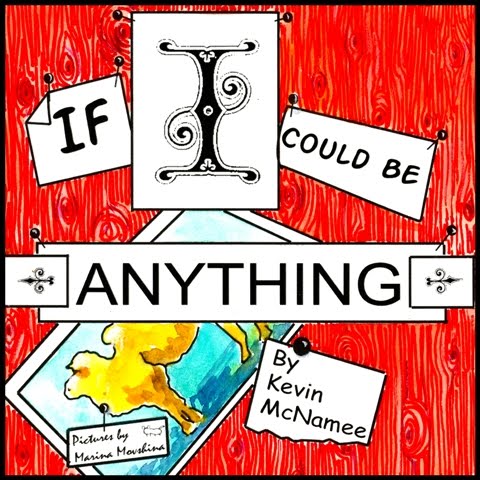
Kevin McNamee joins us today at Writers in Business. He is a writer and poet living in Yonkers, NY. He primarily writes for the children’s market. He has several children’s picture books published including If I Could Be Anything, The Sister Exchange, and The Soggy Town of Hilltop. These books are available at Guardian Angel Publishing, Amazon.com, Barnes and Noble or ask your local bookstore.


When Kevin isn’t writing, he spends his time playing hide and seek, at the insistence of his five year old daughter, and at his day job, at the insistence of his wife. When time permits, Kevin also enjoys fossil hunting, home-brewing beer, and gardening. He is currently engaged in an epic battle against roving gangs of crazed squirrels who are digging up everything in sight. Kevin notes that the squirrels are winning.

Welcome, Kevin. How do you define your writing?


I discovered writing for children by accident. I was watching my nieces fight and it gave me an idea for a sibling rivalry story. I thought it would be fun to write, and it was. There was no looking back.

There seems like an endless supply of topics to write about for children. What messages would you like to convey through your books?

I think that writing for children carries a lot of responsibility and it’s a challenge that I try to rise to. The world can be a confusing enough place as it is for adults, how much more so for children? If I can help children understand the world around them and help them make sense of various situations that effect them, that would be the most rewarding thing of all, for it would be something that they could carry with them long after they have put down my book.

What can we expect when we read one of your books for the first time?

I try to entertain, and whenever possible educate. I also try to incorporate humor into my work whenever possible. My goal is to write for everybody and to create stories that adults as well as children can enjoy.

Can you describe when you realized you were a real writer?

Somewhere along the way, I stopped doubting my ability. A rejection of my manuscript ceased to be a rejection of myself. A rejection letter became an opportunity to send my manuscript somewhere else. Comments and criticism became opportunities to strengthen my story, revise something unworkable, or something to ignore altogether if it didn’t fit with my vision of the story. I was able to refer to myself as a writer without feeling self conscious and … oh yeah, someone was willing to pay me for what I wrote.

How can we learn more about your writing?

To find out more about me, please visit my website at KevinMcNamee.com or my blog. I also have a new child-friendly site with games and activities at KevsChildrensBooks.com.

My daughter is now hooked on your new web site. The Word Jumble game is her favorite. It’s been a pleasure interviewing you and we are looking forward to reading your books. Thanks for joining us today.

Sunday, August 29, 2010

Win a free copy of The Fear Within by Shelby Patrick

Shelby Patrick, born and raised in southeastern Michigan, grew up watching classic horror movies of the great Vincent Price, Christopher Lee, and Peter Cushing. She turned her love of horror into the written word during her senior year in high school when she was introduced to her first writing class.

Since then Shelby has published two creative writing exercise books, Dark Recesses of the Mind and Forbidden Knowledge, as well as various articles throughout the Internet and created several e-books. She’s visiting us today at Writers in Business to announce the release of her newest publication, The Fear Within: A Short Story Collection.

Please tell us about your new book, The Fear Within.


The book contains twenty-five stories of the supernatural and alien encounters -- a romantic getaway that they can’t get away from, a virus that infects the cell phone network and only a small handful of people are uninfected while the rest of the world goes murderously insane, a prison with no bars, no walls, and no escape, dead things that don’t stay dead, a mysterious door in the basement that is to be kept locked at all times, and much more.

Where do you get your ideas?

From everywhere. I’m always in writing mode and it doesn’t take much to spark an idea. One of my stories was based on a paper route I had once; another found its title from a song I heard on the radio. It could be a conversation I overheard or a headline in the news that gives me ideas, and sometimes they just come from my dreams.

Can you tell us a little about yourself and what led you to become a writer?
When I was a kid, I loved to dream and I loved to read. I could play out whole scenes in my mind, like seeing a movie, in which I was the main character and I lived an exciting life. My imagination was my whole world. I didn’t realize how exciting it would turn out to be by penning my fantasies down, but when I was thrown into my first creative writing class, I knew what I was put on this Earth to do – write and share my minds-eye view of the worlds I created with readers. I’ve been writing ever since.

Where can readers go to learn more about your writing?

I have a website at ShelbyPatrick.com. You can join my mailing list, check out blurbs from my novels, get excerpts from my stories, or buy a signed copy of The Fear Within. I also have a blog at WritersHideaway.

I understand you are giving away free copies of The Fear Within.

Yes, I am offering a free signed copy of The Fear Within in a random drawing to anyone who comes and visits me at the following sites on my tour dates of August 29 –September 4, 2010. Please visit my Virtual Book Tour page to learn more.

We wish you all the best with your new book Shelby!

Friday, July 30, 2010

The Cutting Edge: New suspense thriller from Darcia Helle

Darcia Helle returns to announce the release of her new suspense title, The Cutting Edge.

Where did the idea for The Cutting Edge come from?

I was a hairstylist in a small town salon for about 15 years. A lot of crazy things happened there. The women I worked with and I were often equal parts psychologist and stylist. The things clients would tell us still amaze me! Working so closely with people - and their egos - could be difficult. And the small town atmosphere gave our clients the impression that they were allowed to pick apart our personal lives. I used to say that the craziness of our salon would make a great background for a novel. One day, Skye's character popped into my head and that salon was the perfect place for her.

How did you get into writing? Did you always want to become a writer?

I always wrote, though, for some reason, I didn’t think of writing as a career option. When I was young, I would create elaborate fantasy worlds in my head, though I never thought of turning them into books. I actually wanted to be a psychologist but, while in college, decided I couldn't handle the responsibility of coaching people on how to live their lives. I wound up going to cosmetology school and working in my mother’s hair salon. I would write short stories for my kids when they were young and lots of poetry. Then one day, I sat down with an idea in my head that wouldn’t go away and that idea turned into my first book. I haven't stopped since.

How do you approach the blank page?

I don’t think I’ve ever had an issue with a blank page. My problem is that I tend to have too many pages at once that belong to too many different stories. I call it writers’ A.D.D. I’m very character-driven and these characters will pop into my head with a story to tell. Staying focused on one character’s story long enough to complete the novel (without distraction from other novels-in-progress) is my biggest problem. And it’s one that I have yet to master.

What is something most people don’t know about you?

I'm married to my pen pal! During the first Gulf War, Michael (my husband) was serving in Bosnia and Kuwait. I had a client who was running a pen pal program for military members. This was before the Internet had taken over. I was divorced and loved to write, so she brought me a few names. Michael and I wrote for almost 4 years. We met shortly after he got out of the military and were married 6 months
later.

Please visit Darcia at Quiet Fury Books to learn more about The Cutting Edge and her other titles.

Wednesday, July 21, 2010

Create Visibility Before Getting Published: Build Your Platform by Karen Cioffi

Today we are joined by author and freelance writer, Karen Cioffi. She is a reviewer for BookPleasures.com and Muse Book Reviews, and co-moderator of a children’s critique group. Karen provides ghostwriting, editing, proofreading and critiques along with website and blogsite creation. She is our guest blogger today and shares her wisdom on the importance of building your platform.

Create Visibility Before Getting Published: Build Your Platform
By Karen Cioffi

The road to publication can be long and winding ... and filled with rejection. So, what do you do while you’re submitting your manuscript and waiting patiently? Okay, maybe not patiently, but waiting nonetheless.

That’s easy. And, it’s very important, create visibility. I don’t mean standing on the street corner singing at the top of your lungs, I mean creating an online presence that depicts who and what you are. In other words, you need to create your platform.

There are a number of writers who are reluctant to begin promoting themselves because they haven’t landed a publisher yet. Or, they’re still learning the craft. This mentality won’t cut it today. You need to begin that visibility.

First step in your platform journey is to create a blog using a blog site such as Blogger, or a website; either one is relatively simple to create, and can be free. Obviously, you will want to create your platform right from the beginning by posting to your blog with content that is in the genre you are writing.

Important Tip: Make the name of your site something that will grow with you, and your name should be part of the site name.

But wait a minute, let me backtrack. For those who aren’t sure what a platform is, it is a means to let readers know what your area of expertise is. Yes, I know, you might be shaking your head and thinking that you don’t have an area of expertise, but this is how you create it.

The next step in your journey is to create your platform and online visibility. Learn your craft and as you’re learning, write about what you learn. In other words, if your book is about cooking, blog about cooking—you will be creating your area of expertise.

Once you feel comfortable adding content to your blog, start writing articles and submitting them to article directories. Again, keep them focused on the area of expertise you are trying to create. You may not get paid for them, but they will establish an online presence. And, if your articles are beneficial or interesting to others, it will bring traffic to your site.

The publishing and marketing industry has changed. In today’s writing market publishing houses, big and small, expect you to:

1. Have and online presence (website or blog)
2. Have a platform
3. Have a following
4. Have the potential to increase that following
5. Have a marketing strategy
6. Be able to sell your book

Selling books is now a joint effort between the publishing house and the author. And, if you’re venturing into the self-publishing arena, promoting yourself is even more important. Don’t procrastinate. Start creating your online presence and platform today.

Karen Cioffi is an author and freelance writer. Stop by her site, Karen Cioffi (KarenCioffi.com), and sign up for the FREE monthly newsletter, A Writer’s World. It offers writing and marketing articles, tips and links, book reviews, resources and much more. While there, you can also pick up a free e-book about writing and/or marketing.

Wednesday, July 7, 2010

Chelle Korgis, Historical Writer and 30 Something Blogger

Chelle Korgis is a native from Kankakee, Illinois who now resides in the state of Missouri. Her interest in writing began at an early age and her first piece was printed in The Christian County News-Journal in 2002.

Her writing has been published Digi Tall-News Media, Ozark Senior Living, U.S. Legacies Magazine, and Friends and Neighbor. Her two books, Ozark and Nixa, were published by Arcadia Publishing.

Thank you for joining us today Chelle. Tell us more about your writing.


As mentioned above, I have 2 non-fiction books published. I have also written many poems including "Lonely Old Man" and "Ole Mother Nature" which won reader awards in 2002. Today, I am writing articles based on women in their 30s focusing on how the economy continues to influence their marriages. At some point, I hope to write a 30 Something column in magazines or newspapers.

Can you share article titles and publications your work has appeared in?

- September 11, 2002: A County Remembers - (Christian County News-Journal, 2002)
- Centenarian, Irene Murphy - (Ozark Senior Living, 2002)
- A Trip Back In Time - (Ozark Senior Living, 2002)
- Inquisitive Little Minds - (Christian County News-Journal, 2002)
- A Little Prayer - (Friends and Neighbors Magazine, 2002)
- Pumpkins are the reason for planting this season - (Christian County News-Journal, 2002)
- Are our rights being violated? - (Christian County News-Journal, 2002)

What or who encouraged you to start writing?

I was first inspired to write when I was a teenager and started reading the poems written by Emily Dickinson. I also enjoyed reading books by Dean Koontz.
When I was 30, I was impressed when I discovered that my father wrote poetry.

My idea to start writing about history evolved from time spent driving around our town with my former husband taking pictures of old scenery and buildings.

What topics inspire you?

Non-fiction history continues to pique my interest; however, after talking with many friends I've started writing about everyday women who are having troubles in their marriages. After ending my 10 year marriage from Hell, I’m now a single mother and have a lot to share on this topic.

Please visit Chelle online at Chellewrites.webs.com for more information. You can order her books through her web site or through Amazon.com.

Sunday, March 21, 2010

Tom Gillispie - The Master of Simple, Powerful Words

Joining us today from Rural Hall, NC is Tom Gillispie, writer and editor extraordinaire. Tom was a career newspaper writer and copy editor working at eight newspapers over a span of 30-plus years. Today, he is a freelance editor, proofreader and writer. He edits magazine articles, business letters, novels, non-fiction books and more.

Tell us about services you offer.


If you owned a business and wanted a regular company newspaper (print or online), I could take photos, write stories, lay out pages and edit copy. Except for ads, I could do it all. The last time I did that was late 2008.

I have written (and still occasionally write) newspaper, magazine and online articles, but my main thing is editing. I edit fiction and non-fiction books; I edit for writers, businessmen, lawyers or anyone who has written a resume. I have tutored writers, usually via email or chat. I offer academic editing and tutoring, although I will not write academic papers. For all writers, I don’t rewrite your work, unless it’s a mess. I try to let the client’s voice shine through. He/she might not even notice the changes if not for Track Changes in Word.

Who do you usually work with?

For 30 years, I have edited for newspapers, and I still do that one or two days a week on a freelance basis. Otherwise, I’ve edited fiction and non-fiction books, magazine articles, web-site material and even law work. People often ask if I edit their kind of writing. I probably do. Two women were uncertain if I could edit their books on spirituality. Turned out that I could. Another woman feared that I couldn’t edit her novel. I told her to send a chapter and pay me for that chapter when it was done. I worked on that novel and a second one for her. Still another woman had written an ebook on care of hands and toenails, and she seemed thrilled with the editing.

You have stated, “I tighten, focus and improve copy, and I'm good at fact-checking. Everything I edit gets a little shorter, a little tighter, and, usually, a lot better.” Can you give us an example of how you achieve this?

I cut out unnecessary modifiers like certainly and very. Do you need to say that the 7-1, 300-plus-pound Shaquille O’Neal is huge or massive? The numbers say it. Can something be very unique? Can a woman be very pregnant? Sometimes I exchange big words (exacerbate) for smaller ones (weaken, worsen) that are familiar. I look for strong verbs. I untangle long, messy sentences and paragraphs.

I often do this on my blog to show writers and editors what I’m thinking. I recently heard this on TV: There is no such thing as that which is impossible. Sounds very profound (I couldn’t resist), doesn’t it? I’d change that to Nothing is impossible. Simple. Powerful.

I find ways to use the fewest words possible. Shakespeare, for instance, wasn’t famous for being wordy. He made every word count.

You created the Yahoo group, Freelance Writers and Editors. As a member of the group, I’m impressed by the support and encouragement offered by members. There is camaraderie present and a genuine effort to share resources. Please tell us about the group. Why did you start it? What role would you like it to play in the lives of writers and editors? Can anyone join or are there criteria that must be met?

I started the group, I admit, to find work. I wanted it to be useful to writers and editors, but that was my ultimate goal. It’s turned into more than I expected. One of our members tried me hard when the group started. He wanted to see if I’d throw him out of the group. I told him he didn’t need foul language to get his ideas across; I believed he could be a valued and valuable member of the group. And he has. When he had surgery, group members got in touch with the family and followed his progress. And when his wife died, we mourned with him.

Some of us have learned about grammar, computer programs, helpful web sites and such. We’ve shared laughs and picked on each other. I won’t say the group has been family – most of the nearly 500 members never speak up – but I feel close to several people I’ve never met in person.

As for membership, I ask that potential members be a writer or an editor. If they’re selling products or they don’t use the word editor, writer or freelancer, they don’t get in. If they don’t write anything, they don’t get in.

Can you share a personal experience with us on writing vs. editing?

When I first started, I wanted to be a writer, but I had to learn how to lay out newspaper pages. When I was working at a weekly paper, the sports editor of a nearby daily called and offered me a copy-editing job. He told me that any metropolitan daily would hire me as a copy editor, but he added that no newspaper would hire me as a writer. That wasn’t true, but that newspaper tried to convert me to a full-time copy editor.


I was interviewing for another writing job, and I took their test. The sports editor said he would hire me as a copy editor but not as a writer. I told him that he’d never hire me.

I went through that at every job. I was better than most of the writers they had, but they always wanted to make me a copy editor. I knew I was probably a better editor than writer, but, dammit, I wanted to write. And I have. I’ve written for nine papers I worked for. I’ve written on a freelance basis for dozens of newspapers, The Miami Herald, Washington Post and Baltimore Sun included. I’ve written for probably 20 magazines, including The Sporting News and Sports Illustrated, on a freelance basis. And I’ve written three books and several comic-book scripts.

But I’ve come to realize that my talents are all based on copy editing. My copy editor’s “ear” makes me a better writer, and my copy editor’s “eye” makes me a better photographer and page designer.

I’ve come to terms with being a copy editor. It’s what I do best. But I write when I can.


To learn more about how Tom can help your writing reach new heights, please visit his web site. You can see more of his work at his blog and his writing blog. If you are a racing fan, don’t miss Tom’s books on the subject: Racing books.

Saturday, March 6, 2010

Lisa Jackson Chats about Editing, Writing and Zombies!

My guest today is Lisa Jackson who makes her home in Southern New Hampshire. She is a professional writer and editor who enjoys working with words. Lisa is the owner of Write Your Way and creates fiction under the pen name Lisa Haselton.

Can you tell us about your business, Write Your Way? What services do you offer?


Sure. I’m an independent editor and writer and my business provides writing and editing services to businesses, publishers, and individuals. I love working with folks who want to tighten their writing or get something written. I enjoy working with words, and whether I’m a ghost writer on a project, or get to take public credit, seeing a project through to successful completion is something I’m passionate about.
I have a strong business (high tech, beauty, and software industries) background, along with a strong writing background. I work with corporations, publishers, small businesses, and independent writers and authors. I’ve written and edited marketing materials, business profiles, interviews, tech and process manuals, fiction, memoir, and so on. My interests are varied and I love that – the work never gets boring.

Consulting on a project is no cost. I like to find out as much about a project as I can up front, and if I’m not the right editor or writer, I’ll make recommendations for other resources. I don’t accept a project that I don’t feel confident I can complete to the customer’s satisfaction.

If anyone contacts me for writing or editing services and mentions this blog, I will give 30% off the project fee. Every project is different, but pricing is known before any contract is made.

Your web site mentions the importance of maintaining the writer’s unique ‘voice’. Can you give us an example of this?

We all have certain ways of speaking, and that ‘voice’ comes through in our writing, whether it’s a memo, process manual, or something creative like fiction. Some voices are proper, some include humor, some are passive, some are formal, and the list goes on.

When I’m writing technical manuals, I like to make the text enjoyable to read, so I use short sentences and small words. Fiction writing, especially the narrative, varies from author to author. Stephen King’s voice is different from Dennis Lehane’s and J.K. Rowling’s. We have rhythms to our writing which create the ‘voice’.

When I edit fiction or any non-technical, non-business work, my preference is to make suggestions on sentences/phrases that can be improved upon and instead of changing the text to what I would use, I list examples and let the author rewrite the section as he or she sees fit. More and more often though, I’m having authors tell me to just make the corrections. Seems after having dealt with the manuscript for X number of iterations, they just want it polished. I can work with that, too.

I understand you have a short story in an anthology called The Zombie Cookbook. This was written under your pen name of Lisa Haselton. Please tell us about it. Where can we obtain a copy?

I saw a call last year through Writer’s Chatroom (details on this resource below) for stories and poems for an anthology called The Zombie Cookbook. I’d never written about zombies before, but the title made me laugh, so I had to try.

I came up with a poem, actually several, using names and the zombie theme. I submitted my favorite, A Zombie Named Clete, and it was accepted. After that I just felt like I wanted to write a story to go with the poem. It took quite a while for me to come up with the story, but eventually I was able to come up with the setting and it came together.

The artwork on the cover and in the book are quite, um, appropriate for the subject matter, but the stories inside range from funny to gross. And there are some zombie recipes, too. Details on the book, including ordering information, can be found at: Zombiecookbook.net. This anthology helped me land my first-ever book signing, and I’ve enjoyed being a part of it.

Please tell us about the Writer's Chatroom. It was recently awarded with the 101 Best Websites for Writers designation from Writer's Digest. How can we join?

The Writer’s Chatroom is a fantastic place for writers of any experience and any genre. I’ve been on the staff for over 2 years now and love it.

It’s easy to become involved. Just go to the site and sign up for the chat announcements to be notified of upcoming chats. There are moderated chats every Sunday night from 7-9PM EST. We host authors, agents, and publishers as well has have writing-related evenings.

Every Wednesday night from 8-11PM EST, is an “open chat”, where anyone can go for writing-related help on any subject. There is also a forum folks can join to find critiquers, get advice, find writing markets, anything they need. It’s free, and we like to help other writers. You can find Writer’s Chatroom on MySpace, Facebook, and Twitter, too.

Lisa, it has been a great pleasure to learn about the services you offer. I've also enjoyed spending time in the Writer's Chatroom. What a great resource!

Thank you so much for letting me share a bit about myself. I love words; working with them and meeting others who enjoy reading and writing. My fiction can be found at Lisa Haselton and I’m Lisa Haselton on MySpace as well.

You can follow me on Twitter at LisaJJackson and visit me online at LisaJJackson.com.