Showing posts with label poetry. Show all posts

Saturday, May 14, 2011

Nicole M. Bouchard - Writer, Editor, Instructor

Nicole M. Bouchard is returning to Writers in Business. She is the Editor-in-Chief of The Write Place At the Write Time an online literary magazine which was featured in our April 17th blog. She is also a prolific freelance writer, editor and creative writing instructor. She comes from a mixed background of both journalism and fiction.
Welcome back Nicole. In doing research for our earlier interview, I was inspired by all you do in the literary world and wanted to learn more.

Your published fiction ranges from literary to historical to fantasy. An excerpt of your short story
“Reaching Out to You” won a recent romantic themed writing contest. "One Untruth" a short fiction story, was published in the national literary magazine, Pen Woman. Where do you find your inspiration?


I believe that a story can come about in a myriad of ways; a phrase overheard, a simple everyday gesture, a notion, a dream or impression tugging at your sleeve in want of a form and voice. A fantasy story entitled, “The City of Amaranth” came from a dream I’d had about a golden palace of “gods” who were actually mortal. The story became an unexpected satire touching not only upon deeper spiritual themes but also certain aspects of the publishing world itself and the “gatekeepers” of it, so to speak. “One Untruth", came from a simple 1950s photograph I discovered when moving old boxes to help a friend clean out their basement. I asked about this image of a couple and their children only to find that my impressions about their life together weren’t far from the truth. The story behind the story can be very interesting.


I've seen old photographs like that and often wondered about the stories behind them. How did you get started in your writing career?

I was quite determined and quite young when I chose to be a writer. It was something I’d always wanted to do, a gift I wanted to give myself. I knew it was a ‘difficult’ field yet if not for my own passion for it, I think the field chose me- it was inevitable that we’d meet along the “road less traveled”. I always imagined that it would be good to start young. I remember writing to a male columnist that I’d always admired asking for a few words of advice. Pleasantly enough, he told me that to break into the field at my age couldn’t be done; it was impossible. It would be better if I started in tiny circles and waited. I understood that it wouldn’t be easy, but something about “impossible, can’t, no” has always been oddly motivational for me.

It was about six months later that my first story pitch was accepted and published. I was nineteen doing entertainment journalism a short time later; one of the profiles was of a Broadway actress who I got to meet in person and take a quick back-stage tour of The Phantom of the Opera set with.

To make a long story short, after building my portfolio and taking a turn as a contributing editor, I turned back to my first love of fiction. When those works started being accepted, I was also taking on additional freelance journalism at the time yet wanted more in the literary world. I set myself to thinking about all that I read and experienced in publishing and what kind of a publication I would most want myself. Notebook pages started filling with sketches of what would become The Write Place At the Write Time. Research, consulting with copyright lawyers, design, submission calls and inquiry letters for the first interviews; all were set in motion. To have an incredible team-mate to co-navigate the publication with me as Assistant Editor, I had only to look at my own mentor and creative writing inspiration who’d taught me for so many years- my mother; and so it began as a mother-daughter endeavor to re-imagine the face of online publishing.

At twenty-two, I became one of the youngest members of the NLAPW (National League of American Pen Women).

My heartfelt advice to emerging writers at any age, at any stage is to surround yourself with a support network. Most importantly, believe in yourself and your love of the craft. I was fortunate to have a family that was encouraging me at every step.

Thank you for sharing such wonderful words of encouragement. Writing is such a creative process, it can be challenging to rate the character or quality of one piece over another. That being said, do you have any preferences within your own writing portfolio?

Each piece has its own significance to the writer - closeness to the characters, affinity for theme, etc… Yet if I had to pick out a few pieces that I love most in terms of the entire process of the story, they would be “Fragile Things”, based loosely on a heart-wrenching advice column I kept in a drawer for years, thinking, ‘My God, what happened there?’, "Thief of Shadows" using a fairy tale archetype to delve into the psychology behind a newspaper headline I’d read and "The Age of Victoria" – a historic, emotive piece based on a few first sentences I had written about 9 years ago in a painting class. I hadn’t known much at all about the locale and time period when I first built the outer frame of the story; when I did the research, the elements I’d chosen, such as the protagonist’s vocation, were fittingly accurate. This is where I feel the divine inspiration comes into play.


Thank you for sharing material from your creative writing course, “Passion, Philosophy and Prose: The Power of the Pen". The information is thought-provoking and insightful. Your comments in the first paragraph caught my attention, “One of the foundations upon which I build my continually improved-upon philosophy about the craft of writing, is that often times, the 'rules' are invitations to do something entirely opposite and therefore, utterly original.” Is your goal of the course to help writers explore the inspiration for creative writing or more to learn the mechanics of it?

The first session of the course was this past winter from Feb 23rd - March 23rd. Students are still in contact and it has been such a wonderful experience to see their responses to the different course materials spread out over four sessions (four weeks). The sensory exercises, visualizations were immensely revealing about what they needed or wanted on a deeper level to do with their writing. Each has a unique talent and they rose to all occasions. It’s enlightening to teach because you fall in love with the subject all over again and learn from the perspective of your students. To know that they’ve gotten value out of the course is above and beyond all of the fun we’d had. It's truly about the creative process as opposed to the mechanics- yet it does have some helpful hints and resources for submitting work.

Are there any books you recommend related to the mechanics of writing?

Yes, I do recommend to writers the book “Formatting and Submitting Your Manuscript” by Cynthia Laufenberg. It is one of the best for queries, outlines, proposals and nearly any format you would ever need. A book that deals with the mechanics and tools of the craft itself, is "The Portable MFA in Creative Writing" by the New York Writer’s Workshop. They are both, I feel, desk-top essentials in a writer’s office.

Nicole, it’s been a pleasure learning more about your writing. I’m looking forward to following your journey. Readers can learn more by visiting The Write Place at the Write Time. Are there any favorite quotes you would like to share?

Writing a book is an adventure. To begin with, it is a toy and an amusement; then it becomes a mistress, and then it becomes a master, and then a tyrant. The last phase is that just as you are about to be reconciled to your servitude, you kill the monster, and fling him out to the public. ~ Winston Churchill

Saturday, February 5, 2011

Poet, Writer and Teacher - Linda M. Rhinehart Neas

Linda M. Rhinehart Neas is visiting us today from snowy Massachusetts. She has written extensively in various venues, publishing and performing her work throughout New England. When not writing, Linda is teaching English as a second language at the University of Massachusetts, where she received her Master’s in Education.

Linda’s first complete book of poems, Winter of the Soul, was published in February 2008. Gogo’s Dream: Discovering Swaziland, a collection of poems dedicated to those who work to aid the peoples of Swaziland was published this year. All proceeds from the sale of Gogo’s Dream go directly to Possible Dreams International.

As a published poet, journalist, blogger, freelance writer and award-winning author, you sound like a very motivated and busy woman. Can you tell us about your typical day of writing? Do you enjoy one sort of writing over another?


Good question, Brigitte. My typical day starts with a cup of tea after my walk at my desk in the corner of my kitchen looking out at my meditation garden. Usually, I begin by checking emails, writing answers to questions, responding to my queries, etc. Then, depending on what is on the calendar, I begin writing in earnest. Most days I write from around 8:30 a.m. until noon-ish, when I stop for lunch, then from around 1 p.m. until 6-6:30. Of course, there are interruptions, but for the most part, I am writing for a good six or seven hours a day.

My first love is poetry. I just relish the way words can be twisted and turned in such a short space to create amazing images. Unfortunately, as all poets know, poetry doesn’t pay the bills. Therefore, I spend most of my time now on writing for BrightHub’s Educational Channel and other freelance pursuits.

I, also, schedule time in to work on a novel I unexpectedly started from what I thought was going to be a short story, but then I fell in love with my characters, which means telling their whole story, not just a snippet.

Viewing your meditation garden in the morning sounds like a peaceful way to begin the day. I noticed you are a member of National Writers' Union, Teachers of English to Speakers of Other Languages, and National Association of Multicultural Educators. Have you found these memberships to be beneficial to your writing career?

The National Writers’ Union, I feel is beneficial in that they provide guidelines and advice when I am struggling with what to do about a contract or how I should handle a client. They have also been a great help in suggestions for marketing my work. I would recommend membership to any freelancer or writer.

The other two organizations connect to my teaching career. As an English language teacher, I do get ideas for writing from the interactions of my students. Mostly, those experiences have gone into my poetry, however.

It's good to hear about your positive experiences with the National Writers' Union. I plan to explore their web site for more information. Marketing and promotion are a big part of writing. Can you share a marketing idea that has provided positive results for you?

I have found Women on Writing (WOW) to be an excellent promotional tool. I held a blog tour through WOW for my book Gogo’s Dream: Swaziland Discovered. The tour not only allowed me to connect to other writers, and the readers of their blogs, but also helped with sales, which of course was the purpose of the promotion.

Blog tours are a great way to get your name “out there.” The team at WOW does an excellent job of setting up the tour and providing the blog writers and the guests with whatever they need.

I've heard so many great things about Women On Writing recently. I had no idea they could help with blog tours as well. I'm glad your tour was successful. Can you tell us about Gogo's Dream?

Gogo’s Dream began as a series of poems I wrote for the Poem-a-Day Challenge held by Robert Lee Brewer of Writers’ Digest. He had suggested we write the poems with a theme in mind. I was looking for a way to promote the work of Possible Dreams International, of which I am an ambassador.

Gogo is the Swazi name for grandmother. As a grandmother, myself, I took the plight of the Gogo’s personally. My relationship with them and the others in Swaziland is purely virtual. I have yet to visit Swaziland, although I hope to do so someday.

Learning about the struggles of these brave women to raise grandchildren who have been orphaned by HIV/AIDS, touched my heart. Many of the Gogos are raising ten or more children. They all live in small one-room huts without running water or the basics of life that we take for granted. Their stories inspired and informed my poetry.

At the end of the month, I realized I had a book, which I published using Blurb.com. I liked this because it made it easy for me to get the book out into people’s hands, immediately, that they could purchase online for the less than the cost of a pizza.

Gogos sound like amazing women who put their heart and soul into caring for children. I understand profits from this book are being donated to Possible Dreams International. What inspired this decision?

Possible Dreams International is an organization, which was co-created by my friend, Dr. Maithri Goonetilleke and one of his fellow doctors. The work they do in Swaziland is with the poorest of the poor, those people who have been devastated by poverty and disease. Most of their work is with the Gogos, who, as I said previously, are raising their grandchildren under extreme poverty. From the first time I heard about the work that Maithri, a fellow poet, was doing, I knew I wanted to be part of his team.

Writing and publishing, Gogo’s Dream, was a way to give to PDI in a manner that I would not be able to do by simply writing a check. Gogo’s Dream, not only raises much need funds for PDI, but it also educates others through the poetry to who the Gogos are, who the people of Swaziland are and what their lives are like in their beautiful, landlocked country.

Linda, I'm so very impressed with your work and the inspiration behind Gogo's Dream. How can we learn more about your writing?

First, Brigitte, let me thank you for this interview and for sharing my love of writing with your readers. To learn more about my writing, please visit
my web site, hubfolio and my blog.

I encourage visitors to leave comments on my blog, to which I will respond, promptly. Knowing that something I have written touches another’s soul or inspires someone is what brings me great joy as a writer.

Monday, September 20, 2010

Great Books for Kids by author Kevin McNamee

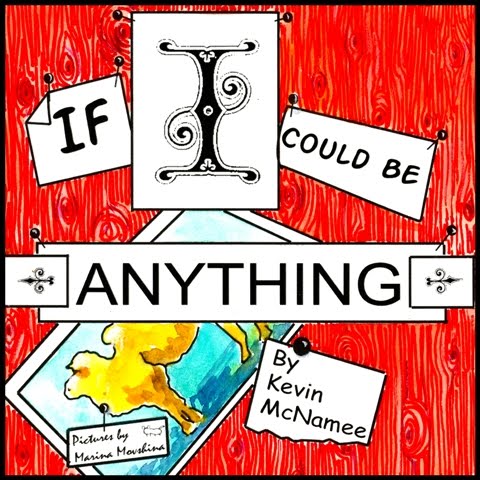
Kevin McNamee joins us today at Writers in Business. He is a writer and poet living in Yonkers, NY. He primarily writes for the children’s market. He has several children’s picture books published including If I Could Be Anything, The Sister Exchange, and The Soggy Town of Hilltop. These books are available at Guardian Angel Publishing, Amazon.com, Barnes and Noble or ask your local bookstore.


When Kevin isn’t writing, he spends his time playing hide and seek, at the insistence of his five year old daughter, and at his day job, at the insistence of his wife. When time permits, Kevin also enjoys fossil hunting, home-brewing beer, and gardening. He is currently engaged in an epic battle against roving gangs of crazed squirrels who are digging up everything in sight. Kevin notes that the squirrels are winning.

Welcome, Kevin. How do you define your writing?


I discovered writing for children by accident. I was watching my nieces fight and it gave me an idea for a sibling rivalry story. I thought it would be fun to write, and it was. There was no looking back.

There seems like an endless supply of topics to write about for children. What messages would you like to convey through your books?

I think that writing for children carries a lot of responsibility and it’s a challenge that I try to rise to. The world can be a confusing enough place as it is for adults, how much more so for children? If I can help children understand the world around them and help them make sense of various situations that effect them, that would be the most rewarding thing of all, for it would be something that they could carry with them long after they have put down my book.

What can we expect when we read one of your books for the first time?

I try to entertain, and whenever possible educate. I also try to incorporate humor into my work whenever possible. My goal is to write for everybody and to create stories that adults as well as children can enjoy.

Can you describe when you realized you were a real writer?

Somewhere along the way, I stopped doubting my ability. A rejection of my manuscript ceased to be a rejection of myself. A rejection letter became an opportunity to send my manuscript somewhere else. Comments and criticism became opportunities to strengthen my story, revise something unworkable, or something to ignore altogether if it didn’t fit with my vision of the story. I was able to refer to myself as a writer without feeling self conscious and … oh yeah, someone was willing to pay me for what I wrote.

How can we learn more about your writing?

To find out more about me, please visit my website at KevinMcNamee.com or my blog. I also have a new child-friendly site with games and activities at KevsChildrensBooks.com.

My daughter is now hooked on your new web site. The Word Jumble game is her favorite. It’s been a pleasure interviewing you and we are looking forward to reading your books. Thanks for joining us today.

Saturday, November 21, 2009

The Art of Writing by Margaret (Peggy) Fieland

Born and raised in New York City, Margaret Fieland has been around art and music all her life. Daughter of a painter, she is the mother of three grown sons and an accomplished flute and piccolo player. She is an avid science fiction fan. She lives in the suburbs west of Boston, MA with her partner and seven dogs.

Her poems, articles and stories have appeared in journals and anthologies such as Main Channel Voices, Echolocation, and Twisted Tongue. Her first book, The Angry Little Boy, has been completed.

Welcome Peggy.

Thank you Brigitte, I'm happy to be here.

Tell us what you write about

I'm a professional Computer Software engineer (BA in mathematics, MS in computer science), but I've written poetry as far back as I can remember.

Who has inspired you in your writing?
Lewis Carroll. My all time favorite book is “Alice in Wonderland,” which I reread every exam time when I was in college, as I made it a habit to avoid the library during exams. I'm also very fond of Carroll's poetry. I've got several stanzas of Jabberwocky and You Are Old, Father William memorized.


What made you want to start writing?

Good question – I started and became addicted. I really love writing -- and I just plain enjoy writing poetry, rhymed and unrhymed. I've developed my own algorithm for generating rhymes, which means that I often don't have to use a rhyming dictionary at all.

Besides, if I don't write it down it stays stuck in my head.


When do you write? Do you work best when you set aside specific times?

Since I have a full time job, I write whenever the spirit moves me, and I have (or can make) the time. The nice thing about poetry is that a lot of it is short and taking a couple of minutes to jot down poetry is pretty easy to do. Waiting for appointments is a favorite time to write. I've had good luck being "inspired" by those articles you find in waiting rooms.

Do you ever have a problem with writer's block?

Not so far, thank goodness {pauses to knock wood}.

You may visit Peggy’s website at MargaretFieland.com to view some of her writing. Peggy is a member of VBT- Writers on the Move who are celebrating their anniversary this November.

Learn more about this fantastic promotional group for authors by visiting VBT-WritersontheMove.blogspot.com. Prizes are given away each day during this event.

Sunday, September 27, 2009

Sage Cohen on Poetry and Writing the Life Poetic

Please extend a warm welcome to award-winning poet Sage Cohen, author of Writing the Life Poetic: An Invitation to Read and Write Poetry published this year by Writer’s Digest Books, and the poetry collection Like the Heart, the World. Sage received her BA in Comparative Literature at Brown University and MA in English, Creative Writing from New York University. She feels the real learning laboratory is life!

Her web sites Writing the Life Poetic , Sage Said So and blog Writing the Life Poetic are filled with her creativity in both the literary and artistic realm. I just love her original illustrations!

~How does poetry make the world a better place to live?
I think poetry fills the gap left by the so-called objective truth that dominates our media, science and legislation. Many of us want to comprehend and communicate the complexity of human experience on a deeper, more soulful level. Poetry gives us a shared language that is more subtle, more human, and—at its best—more universally “true” than we are capable of achieving with just the facts.

~ How has integrating the reading and writing of poetry into your life impacted you?

I will risk sounding melodramatic in saying that poetry saved my life. I stumbled into a writing practice at an extremely vulnerable time in my early teenage years. Poetry gave me then, as it does today, a way of giving voice to feelings and ideas that felt too risky and complicated to speak out loud. There was a kind of alchemy in writing through such vulnerabilities...by welcoming them in language, I was able to transform the energies of fear, pain and loneliness into a kind of friendly camaraderie with myself. In a way, I wrote myself into a trust that I belonged in this world.

~Why did you write Writing the Life Poetic?
While working with writers for the past fifteen years, I have observed that even the most creative people fear that they don’t have what it takes to write and read poetry. I wrote Writing the Life Poetic to put poetry back into the hands of the people––not because they are aspiring to become the poet laureate of the United States––but because poetry is one of the great pleasures in life.”

~What sets Writing the Life Poetic apart from other poetry how-to books?
The craft of poetry has been well documented in a variety of books that offer a valuable service to serious writers striving to become competent poets. Now it’s time for a poetry book that does more than lecture from the front of the classroom. Writing the Life Poetic was written to be a contagiously fun adventure in writing. Through an entertaining mix of insights, exercises, expert guidance and encouragement, I hope to get readers excited about the possibilities of poetry––and engaged in a creative practice. Leonard Cohen says: “Poetry is just the evidence of life. If your life is burning well, poetry is just the ash.” My goal is that Writing the Life Poetic be the flame fueling the life well lived.

~Is it true that your book and your baby were conceived and birthed at the same time? What did you learn from this process?
Yes, I often refer to my son Theo and Writing the Life Poetic as my multi-media twins! I found out I was pregnant with Theo about two months into the writing of the book and I was making final edits to the book in layout two weeks after he was born. It was fascinating to have two of the most potent creative processes I’ve ever experienced happening in tandem. What I learned is a great respect for the birthing journey; it is one that has completely rewritten me along the way.

I am writing a monthly column this year for The Writer Mama zine titled “The Articulate Conception” which chronicles my journey of becoming an author and a mom. Through the course of ten essays, I am exploring this double-whammy birth trajectory--from the twinkle in my eye to the bags under my eyes. The first column is available here: Articulate Conception.

~I’d love to conclude with a poem of yours. Would you be willing to share one?
Of course! Happy to!

Leaving Buckhorn Springs
By Sage Cohen

The farmland was an orchestra,
its ochres holding a baritone below
the soft bells of farmhouses,
altos of shadowed hills,
violins grieving the late
afternoon light. When I saw
the horses, glazed over with rain,
the battered old motorcycle parked
beside them, I pulled my car over
and silenced it on the gravel.
The rain and I were diamonds
displacing appetite with mystery.
As the horses turned toward me,
the centuries poured through
their powerful necks and my body
was the drum receiving the pulse
of history. The skin between me
and the world became the rhythm
of the rain keeping time with the sky
and into the music walked
the smallest of the horses. We stood
for many measures considering
each other, his eyes the quarter notes
of my heart’s staccato. This symphony
of privacy and silence: this wildness
that the fence between us could not divide.

Sage writes four monthly columns about the craft and business of writing and serves as Poetry Editor for VoiceCatcher 4. Sage co-curates a monthly reading series at Barnes & Noble and teaches the online class Poetry for the People.